What Size Storage Container Do You Need for Your Move or Renovation?
Most people undersize their storage containers. Then they watch half their furniture sit on the driveway while they scramble for a second one. The rest go the other way, pay for empty space they never fill, and kick themselves later.
But there’s a simpler path.
Match your container size to your actual volume, not a guess.
This guide walks you through exactly what fits in each container, how to size it for a house move or a renovation, and the three sizing mistakes we see most often.
By the end, you’ll know exactly what size storage container you need, before you book.
Why the Right Container Size Matters More Than You’d Think
Container sizing isn’t just about dollars. It shapes how your belongings travel, how they store, and how cleanly we deliver them to your new address.
Get it right, and you’ll enjoy:
- Tighter packing. A properly loaded container shifts less in transit, which means lower damage risk.
- Cleaner logistics. One container, one delivery, one bill.
- Predictable pricing. No scrambling for a second unit halfway through the job.
- Easier access. Well-organised containers let our team unload room by room at your new place.
Get it wrong, and you’ll pay twice, handle your belongings twice, and add days to your timeline.
Storage Container Sizes at a Glance
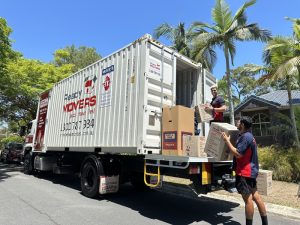
At Ready Movers, we run industrial-grade steel shipping containers chosen for their strength, weatherproofing, and security. The three sizes you’ll hear us talk about most often:
- 10-foot container. A compact unit, roughly 15 cubic metres of space, suited to studios and small loads.
- 20-foot container. Our workhorse, roughly 35 cubic metres, fits the contents of a standard family home.
Every container seals fully, resists pests, and handles the rail freight we use across Australia.
What Fits in Each Container Size
Numbers help, but real-world equivalents help more. Here’s what each size holds comfortably.
A 10-Foot Container (Around 15 Cubic Metres)
Think studio flat or small one-bedroom unit.
- Queen bed, base, and mattress
- Two or three-seater lounge
- Small dining setting
- Fridge, washing machine, and microwave
- 15 to 20 medium packing boxes
- A few pieces of artwork and a bike
This size also suits a decluttering project, a home staging overhaul, or storing furniture while you renovate one room at a time.
A 20-Foot Container (Around 33 Cubic Metres)
The standard choice for most Australian households. Think two to three-bedroom home.
- Two or three full bedroom sets
- Lounge suite, TV unit, and entertainment gear
- Full-sized dining setting for six to eight
- Kitchen whitegoods, including fridge and dishwasher
- Washing machine and dryer
- 40 to 60 medium packing boxes
- Outdoor furniture, BBQ, and garden equipment
- A bike or two
This container carries most family moves and mid-sized renovations, which is why it’s our most-booked size.
When You Need Multiple Containers
Big homes, serious furniture collections, and multi-generational households often need two containers.
Our move manager assesses your inventory during the quoting stage, so nothing gets left behind on loading day.
Match Your Container to Your Home Type
Home size gives you the fastest ballpark. Use this as a starting point, then let us verify during the quote.
Studio or One-Bedroom
A 10-foot container handles it. A tight loader can squeeze a small one-bedroom into half a 20-foot container, but that wastes space you’ve already paid for.
Two-Bedroom Home
Most two-bedroom houses, townhouses, and apartments fit comfortably in a 20-foot container with room to spare. If you’ve got serious outdoor gear, a separate shed, or a large wardrobe collection, get us to confirm.
Three-Bedroom Family Home
A 20-foot container handles the classic three-bedroom Aussie home. You’ll fill it well without making the load awkward.
Four-Bedroom and Larger
Go with a 2x 20-foot container, or two 20-foot containers, depending on ceiling heights and how much you’re storing. Larger homes with multiple garage set-ups, outdoor kitchens, or workshop gear almost always need two.
Sizing Your Container for a Renovation
Renovations change the sizing conversation. You’re not moving everything out, you’re protecting what matters while the tradies work.
For most renovations:
- Single-room refresh (kitchen, bathroom, or one bedroom). A 10-foot container covers the furniture and cabinetry comfortably.
- Mid-sized renovation (open-plan living, two bedrooms, or a kitchen plus bathroom). Step up to a 20-foot container, especially if you’re storing for more than a month.
- Full home renovation or extension. A 20-foot or 2x 20-foot container, sometimes placed on-site for daily access, sometimes parked at our depot.
A useful angle: the storage container for renovation that families often forget about is the space you save inside the house. Even if the container seems oversized, it beats living around stacked furniture for six months.
Our storage containers cover short-term projects and long renovation timelines, with flexible access along the way.
The Three Most Common Sizing Mistakes
After two decades of loading containers, the same three mistakes keep cropping up.
1. Forgetting the Garage and the Shed
People size for the house, then remember the lawnmower, the bikes, the workbench, and the BBQ on packing day. Walk through every outdoor area before you request a quote.
2. Underestimating Boxes
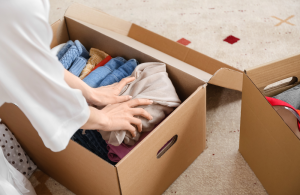
Clothes, books, and kitchenware compress into more boxes than most people expect. For a three-bedroom home, budget at least 40 medium boxes. For a four-bedroom, plan for 70-plus. Our packing service team can run the numbers for you if you’d rather not count.
3. Skipping the Buffer
A container that’s 100 per cent full becomes hard to load safely. Aim for 85 to 90 per cent full so your belongings pack tightly without stress, which protects fragile items and speeds up unloading at the other end.
How to Estimate Your Volume at Home
A quick method we share with customers:
- Walk through each room and list furniture, appliances, and stand-alone items.
- Count boxes by category: kitchen, wardrobes, pantry, kids’ rooms, garage, and books.
- Add oversized items on a separate list: pianos, tool chests, outdoor dining, and gym gear.
- Once you have this list, call the list through to our team, or use our quote form, and upload your list there.
We’ll cross-check against two decades of local and interstate moves to lock in the right size first time. We’d rather spend ten minutes on the phone than have you caught short on loading day.
If you want to see the single-container approach in action, our guide on how storage containers work walks through the full process from packing through to redelivery.
Get the Right Size First Time With Ready Movers
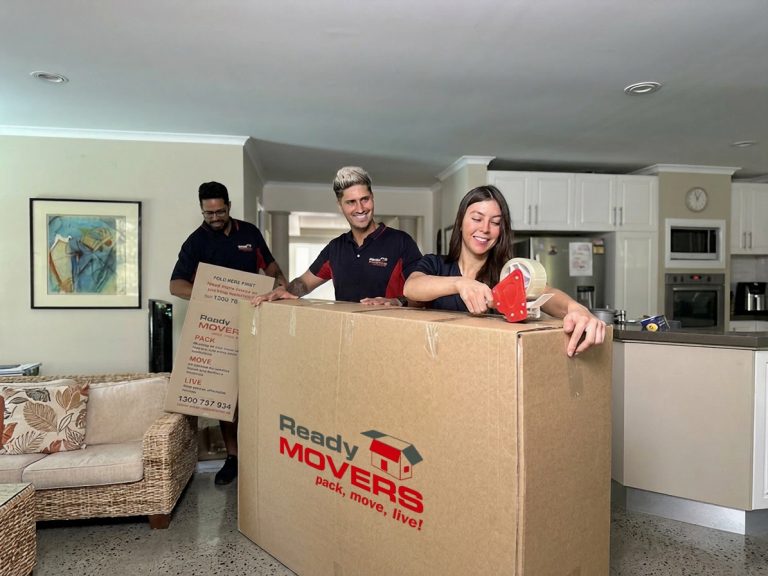
Storage should make your move simpler, not messier. At Ready Movers, we pair the right container size with fully managed packing, transport, and unpacking, all handled by the same team. One point of contact, one set of hands on your belongings, one fully insured process.
We’ve been family-owned since 2004, we’re AFRA-accredited, and we’re trusted by more than 20,000 Australian households.
Our storage containers stay sealed from the moment we load them to the moment we deliver them, backed by 24-hour secure monitoring at every depot and our written No Damage Guarantee on local moves.
Need a hand picking the right container? Request your fixed-price storage and moving quote or call our team on 1300 787 934. We’ll confirm your volume, lock in the right size, and take the guesswork off your plate.